A-Z Of Hidden Nasties!
Alphabetical Glossary of Animal Substances
By Juliet Gellatley, Director of VVF and Laura Scott,
MSc Nutrition
What’s a vegetarian?
Vegetarian
A vegetarian doesn’t eat red meat (such as lamb, beef,
pork, bacon etc), white meat (poultry such as chicken, duck
and turkey), fish (eg anchovies, salmon, cod etc) or other
water life (eg prawns, lobsters, crabs, oysters, shellfish
etc) or slaughterhouse by-products (eg gelatine, animal fat,
lard or animal rennet). There are estimated to be some 5
million vegetarians in the UK.
Lacto-Ovo-Vegetarian
Most vegetarians fit this category. It means vegetarians
who don’t eat meat or fish but do eat dairy products
and eggs.
Lacto-Vegetarian
A vegetarian who eats dairy products but no eggs.
Ovo-Vegetarian
A vegetarian who eats eggs but no dairy products.
Vegan
A vegan eats legumes (eg beans of all sorts, lentils, peas),
grains (eg cereals, bread, pasta, rice etc), fruits, nuts,
seeds and vegetables. Vegans do not eat any animal products
at all – so no meat, fish or slaughterhouse by-products like
a vegetarian – but additionally exclude dairy products, eggs
and honey. Most vegans also choose not to wear animal products
such as fur, wool, silk or leather due to the exploitation
(and usually death) of the animals concerned in order to
derive them.
The easy way to remember vegetarians eat nothing from slaughtered
animals; vegans eat nothing from living or dead animals.
Alphabetical Glossary of Animal Substances
A
A (Vitamin) – can be derived from egg yolk
or fish liveroils used in nutritional food supplements and
cosmetics.
albumen -
(egg white) protein part of an egg, usedin food as a binder.
alcohol -
many types of alcohol are refined usinganimal-derived ingredients, such as
*isinglass .
(*Viva! runs a vegan wine and beer club – contact them for a free catalogue
(see their details at end).
alpaca – clothing material derived from the alpaca, a mammal
related to the llama with long shaggy hair.
anchovy – small
fish of the herring family, often used as a flavour enhancer. Found in Worcester
sauce and pizza toppings.
angora – wool fibre obtained from
goats (called *mohair) or *rabbits and used in clothing. The shearing process
can be painful and traumatic. Angora rabbits are routinely strapped to boards
for shearing which is very stressful and males are killed at birth as have
low wool yields.
animal fat – fat derived from slaughtered
animals. This is boiled off the skin and used in many processed foods eg baked
and pastry products, margarines, soups and stocks as well as soaps.
aspic -
used as a glazing agent from meat or fish-derived jelly.
astrakhan -
luxury clothing material derived from the skin of stillborn or very young lambs
from a breed of sheep originating from Astrakhan in Russia.
B
barn-fresh eggs – eggs
from hens reared indoors, usually thousands to a shed, but
not in cages. Large stocking densities, selective breeding
and poor indoor conditions result in many chicken welfare
problems. After two to three years they are killed for low
grade meat.
battery eggs -
70% of eggs produced in the UK are from hens kept in battery cages. Close confinement
means hens suffer extreme physical and mental suffering. After a year or two
these worn-out hens are slaughtered and ground down to be added to many processed
foods such as pies, pasties and soups (thus disguising their battered bodies).
This system is to be outlawed in Europe from 2012 but replacement ‘enriched
cages’ are little better with only tiny amounts of extra space being
provided. *see also eggs, free-range eggs, barn-fresh eggs.
beef -
meat from cows. Beef cattle may spend just six months of their life outside.
They are then sometimes kept inside feedlots (huge barns) where they are fed
a concentrated diet to be fattened for slaughter before they reach 36 months
(natural lifespan is 20 to 30 years, depending on breed).
beer -
most real ales (cast-conditioned) are clarified (cleared) with animal-derived
*isinglass. Canned, keg and some bottled beers are normally animal-free.
bees -
are exploited in similar ways to farmed animals. Beekeepers often kill the
old queen bees at two years old (natural lifespan is five years) and replace
her with a new one. This is because older queens are much more likely to swarm
– fly away and form a new colony – than younger ones, and since swarming requires
a queen, the queen's wings are often clipped. Artificial insemination involving
the death of the male is the norm for the generation of new queen bees. The
favoured method of obtaining bee sperm is to pull off the insect's head: decapitation
sends an electrical impulse to the nervous system, causing sexual arousal.
The lower half of the headless bee is then squeezed to make it ejaculate, and
the resulting liquid is collected in a hypodermic syringe for insertion into
the female. On factory bee farms, hundreds of queens are kept in cages waiting
to be flown around the country. After arrival at the post office or shipping
depot, they can suffer from overheating, cold, get banged around, and be exposed
to insecticides. No matter how careful the beekeeper, bees are always killed
when honey is collected. A whole array of products are derived from bees including
*honey, *propolis, *beeswax and *royal jelly, which are used in cosmetics and
food.
beeswax (E901) – secreted by bees, used in candles,
polishes and cosmetics.
beta-carotene – an antioxidant (disease-fighting)
plant form of vitamin A, found in fruits and vegetables often used as an orange
colourant in soft drinks and foods. Foods containing beta-carotene can include
*gelatine as the carrier for it. The use of gelatine will not necessarily be
listed in the ingredients label.
bone char – The ash of burned
animal bones. Used in bone china crockery and ornaments. Major use to produce
*charcoal.
bone meal – ground or crushed animal bones. Used
in garden and agricultural fertilisers. Also used in some nutritional food
supplements as a source of calcium.
brawn – boiled pig parts
such as the meat, ears and tongue.
bristle – animal hair used
for brushes, mostly from pigs but also from *sable, horse and badger. The hair
may be from a slaughtered or living animal. Found in many ‘natural’ brushes
eg shaving/hair/cosmetic make-up/paint (decorating, painting and artist) brushes.
British
Farm Standard – umbrella *farm assurance scheme covering both plant
and animal production eg Farm Assured British Beef & Lamb (FABBL), Assured
Chicken Production (ACP). Food produced under this scheme carries the *Little
Red Tractor trademark symbol and it claims that its standard is a promise to
consumers that, when they buy food carrying the British Farm Standard mark
on the label, it has been produced to meet exacting food safety, environmental
and welfare standards. There is an implied assumption that such a logo ensures
animals are reared to strict welfare standards but work by Viva! and other
groups shows this not to be so and usual intensive farming methods are routinely
allowed.
BSE – Bovine Spongiform Encephalopathy (Mad Cow Disease).
A degenerative brain disease in cattle. First known about in 1986. Responsible
for fatal human form vCJD – new variant Creutzfeldt Jakob Disease.
C
capsules – used in
nutritional food supplements and
FS6
medicines. Often *gelatine-based unless stated as from a
vegetarian source.
carmine (E120) – red
food and drink dye pigment obtained from *cochineal.
casein -
milk-derived protein, used in cheese production. Also found
in most condoms (one brand of condoms now available made
without casein).
castor – substance derived
from beaver anal sex gland and used as a fixative in perfumes
and incense. Synthetic and plant castor oil available.
cashmere -
luxury wool made from the cashmere goat and wild goat of
Tibet. Up to 80% of young goats may be killed as their coats
are not of sufficient quality.
catgut -
dried and twisted intestines of horse or sheep used in surgical
stitching, tennis rackets and musical instruments.
caviar -
fish eggs (*roe) of slaughtered sturgeon or other fish, considered
a delicacy.
chamois – skin of the chamois
antelope, goats, sheep, deer etc used to make very soft leather
cleaning cloths eg chamois leather. Synthetic alternatives
available.
charcoal – roasted (charred)
animal bone or wood. Used in aquarium filters and in refining
cane *sugar.
cheese – dairy product made
from cow’s (and goat’s, buffalo’s, sheep’s)
milk. Unless otherwise stated on labelling is likely to have
been made using animal-derived *rennet.
chewing gum -
some contain animal-derived *glycerine. Wrigley’s use
a vegetable glycerine.
chitin – derived
from the hard parts of insects or crustacea (eg shrimp and
crab), used in shampoos and moisturisers.
cochineal
(E120) – red dye made from the dried bodies of crushed
insects.
cod liver oil – nutritional food
supplement made from the liver of slaughtered cod. Is one
source of essential (omega-3) fats, as well as vitamins *A
and *D. Plant-derived nuts and seeds are alternative sources
of omega-3 fats eg linseed (flax), rapeseed oil and walnuts,
as well as dark green vegetables.
collagen -
constituent of animal connective tissue, which when boiled
produces *gelatine, used in cosmetics.
coral -
derived from the skeletons of ‘primitive’ aquatic
animals. Becoming endangered as removed from oceans by humans
as a tourist souvenir and destroyed by warming sea temperatures
due to global warming.
D
D (Vitamin) – vitamin
supplement added to many processed foods especially cereals
and margarines. Found in two different forms – *D2 and *D3.
D2
(ergocalciferol) – form of vitamin D commercially derived from yeasts,
thus acceptable to vegans. Added to some margarines and cereals as well as
nutritional food supplements.
D3 (cholecalciferol) – form
of vitamin D derived from *lanolin (fat from sheep’s wool) or fish oil.
Added to many cereals and margarines as well as nutritional food supplements.
Derived from live and slaughtered sheep – only that guaranteed from live sheep
wool is listed as suitable for vegetarians. No form of vitamin D3 is acceptable
to vegans.
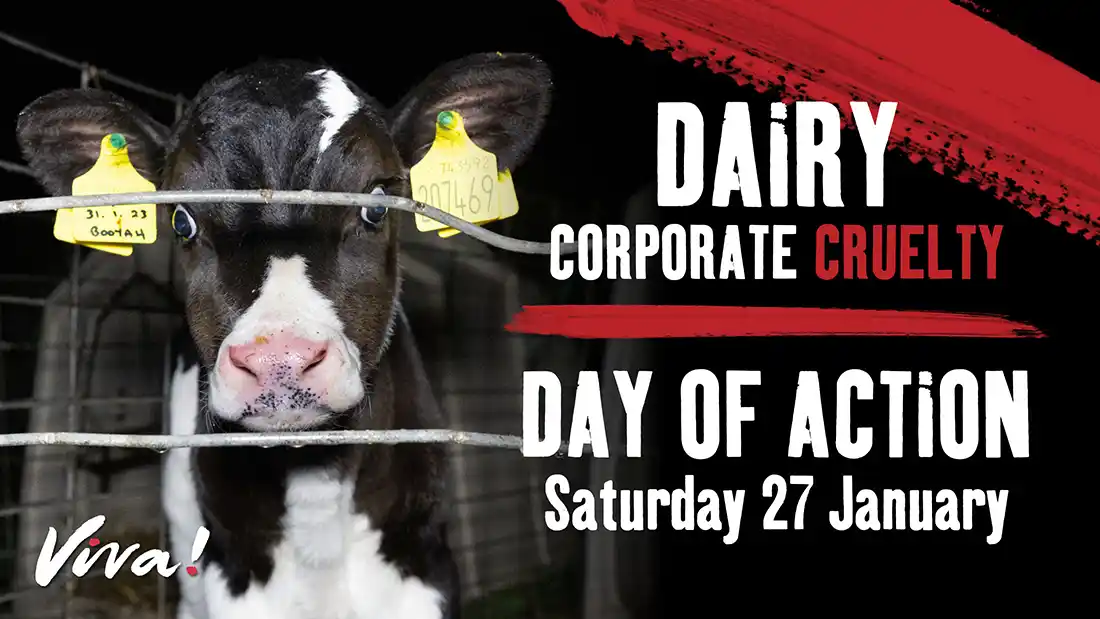
dairy cows – to produce milk, female cows must
be kept in a constant cycle of pregnancy and lactation. Their babies will be
taken away shortly after birth so humans can drink the milk – causing enormous
distress to both cows and calves. Male calves are often killed within hours
or days as they are seen of no economic use (as they can’t produce milk
and are the wrong breed for beef). Females are usually raised for the dairy
herd. Dairy cows are often kept indoors for 6 months of each year. They are
subjected to huge physical strains due to the huge volume of milk that selective
breeding and continual pregnancies ensures. The normal lifespan for a cow is
25 years but dairy cows are usually sent for slaughter after only five years
as their milk yields drop. This is caused by a dairy cow’s body literally
breaking down under the pressures of intensive milk production.
dairy
produce – products made from cows, goats, sheep or any other animal’s
milk. Includes milk, butter, cream, gee (rancid butter used in many Indian
dishes), *casein, yoghurts, cheese, ice-cream, *lactose or anything that contains
these products or derivatives of them.
down – specialised
*feathers from waterfowl (mostly ducks and geese) which are very soft and have
superior thermal insulating properties. Duck down is generally obtained from
slaughtered birds (factory farmed indoors for meat). Geese may be painfully
live plucked – especially goose down produced in Eastern European countries
– and the geese may also be used in the production of *pate de foie gras. Used
in luxury quilts, pillows and outdoor padded jackets, clothing and sleeping
bags.
dripping – melted animal fat.
ducks -
20 million ducks are killed in the UK each year for meat. Almost all are factory
farmed – kept thousands to a shed with no access to water for preening or swimming.
They are killed at just seven weeks old. Viva! campaigns against duck farming.
E
E numbers – European
Union numbering system for food additives, found in most
processed foods. Either animal or vegetable-derived.
eggs -
the unfertilized reproductive cells of domesticated birds especially chickens,
ducks, quail and geese. The wild jungle fowl ancestors of chicken hens would
have previously laid about a dozen eggs in one clutch and then incubated them
– sitting on them to get the right temperature for further development. Years
of selective breeding and removal of eggs as soon as they have been laid means
that the domestic hen unnaturally produces eggs almost every day. Male chicks
are killed as soon as they are hatched (as they cannot lay eggs and are ‘too
scrawny’ for chicken meat). Most eggs eaten in the UK are from hens kept
in *battery cages. Eggs are used in baked products as a liquid; as an emulsifier
of fats (keeping the fat in suspension rather than separating out eg mayonnaise);
as a leavening agent (to hold air in cakes to add lightness) and as a binder
(to stick food together). Found in foods such as pastry, cakes, biscuits, some
pastas, flans, meringues etc. *Lecithin and *lutein are derived from eggs.
eiderdown -
very soft, small *feathers from the rare large sea duck called an Eider duck.
Female Eider plucks her own breast *down as nest-liner for her eggs. The down
is harvested (especially in Iceland) by repeatedly removing the down and eggs
from the nest until the season ends. Un-hatched ducklings die and there is
continual disturbance of the female duck. Very expensive material used as a
luxury filling in pillows and quilts.
elastin – protein found
in the muscles of meat, used in cosmetics
F
farm assurance schemes – there are a number
of these so-called quality farm/food assurance schemes that
are supposed to indicate that the food product meets a set
of agreed standards of agricultural practice eg minimum farm
animal welfare standards. Most are more concerned with creating
an image of animal welfare rather than actually offering
real welfare advantages to farmed animals. The best known
schemes are *British Farm Standard and the associated *Little
Red Tractor logo, *Freedom Foods, *Soil Association Approved.
The Soil Association scheme is considered to be the most
trustworthy of all the schemes. The others approve by-standard
factory farming.
feathers -
bird plumage. Principally chicken, duck and geese but also decorative feathers
from ostriches, peacocks and birds killed by hunters. Wide variety of uses
especially in hats, feather dusters, darts, arrows and fishing lures, mattresses,
pillows and quilts. Feathers (and *down) are by-products of food production,
helping to keep poultry meat prices low. Chicken and duck feathers normally
come from slaughtered, factory farmed birds.
felt – cloth
made from *wool or wool and *fur or wool and animal hair.
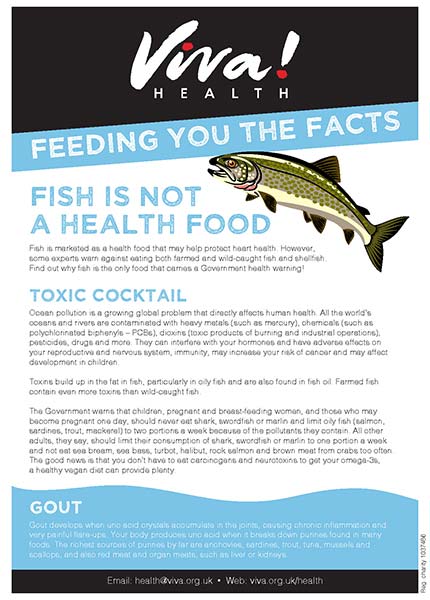
fish -
studies show that fish do feel pain. Most fish eaten now comes from fish farms
as wild fish stocks have been decimated around the world. There are enormous
welfare problems for the fish and health concerns for humans eating fish -
farmed or otherwise. (See also VVF Fishing for Facts report.)
fish
oils – oils made from fish or marine mammals used in soaps, nutritional
food supplements, cosmetics. Plant-derived oils from seeds, nuts and vegetables
are alternatives to fish oils eg linseed (flax), walnuts and rapeseed oil.
flavourings -
term often stated on food labels. May or may not be animal-derived.
Freedom
Foods – An RSPCA assurance scheme aiming to give (but not actually
giving!) farmed animals five basic freedoms (but does NOT mean ‘free-range’):
freedom from fear and distress; from pain, injury and disease; from discomfort
and freedom to behave naturally. To join the scheme farmers, animal hauliers
and abattoir owners have to agree to certain conditions. In order to fully
comply with this no animal could be raised for meat so Freedom Foods is a contradiction
in terms. The written standards vary little from the government’s low
standards. Viva! has video evidence that some farms licensed by the RSPCA under
this scheme are little better than intensive farms.
free-range eggs -
although hens laying these eggs must have access to outdoors the reality is
that most systems keep huge flocks of birds (up to 16,000) in one shed. (Usually
it’s only on the few small scale units that hens are genuinely free range.)
Outside access is usually through a few small holes and this, coupled with
hen’s well-developed ‘pecking order’, means that up to half
the birds in large scale units never actually get to go outside. Once hens’ egg-laying
rate declines they are sent for slaughter. As in all egg systems, males can’t
lay eggs, so they are gassed or macerated at one day old.
free-range
meats – meat from animals kept in the open as opposed to inside factory
farms (though even these would be kept inside for some parts of the year).
Many so-called free-range meats fail good animal welfare needs – eg free-range
pigs are often kept in barren muddy fields instead of their natural home of
woodland. The animals from these systems are still sent for slaughter young
– they are not simply left to die naturally of old age.
fur -
clothing material from slaughtered animals. Millions of caged (especially mink
and fox) and wild-caught animals are killed every year for their fur. Whilst
the UK market for coats made from fur has declined, the fur industry is incorporating
real fur into fur trims on eg coat/jacket hoods and cuffs.
G
gelatin(e) – protein jelly obtained by boiling
animal tissues such as hooves, bones, horns, skin etc. One
of the most widely used animal-derived ingredients in processed
foods and many other products. Used as a gel in most sweets,
jellies, capsules (eg for nutritional food supplements and
drugs), confectionary and all non-digital photographic film.
glycerin(e) or
glycerol (E422) – colourless liquid which can be obtained from animal
fats, sugar fermentation or propylene. Used as a solvent for flavours, also
found in toothpastes.
GMOs – genetically modified organisms.
Insertion of foreign genes into an organism. Both plant and animal GMO species
are being created for eventual use in the human food chain. No human studies
have been conducted to assess possible health impact from eating GMOs. Environmental
damage is likely to be enormous and irreversible. As of March 2004 the Government
has given the go-ahead for the commercial growing of GM maize for dairy cattle
feed. Milk from such GMO-maize-fed cattle will not be labelled. (See also Viva!
Guide Genetic Engineering.)
goats – goats are kept
for their milk (used as a substitute for cow’s milk). Unlike cows, goats
can go on producing milk for a number of years after having a kid but commercial
goat milk production will normally mean they are made to give birth more often.
Kids’ surplus to requirements will be slaughtered as will goats whose
milk yields have dropped. There is a thriving market from ethnic, middle-eastern
cultures for goat’s meat. Some goats (along with some sheep) may be used
to produce illegal *smokies. Some goats will also go for *ritual slaughter.
H
hide – animal skin
used in the clothing, footwear and upholstery industries.
honey – is made-from flower nectar that
is collected by honeybees and then regurgitated back and
forth among them until it is partially digested. After the
final regurgitation, the bees fan the substance with their
wings until it is cool and thick. This mixture, honey, is then stored in the
cells of the hives for larvae and used as their sole source of nutrition in
cold weather and other times when alternative food sources are not available.
The average bee hive contains about 60,000 bees and produces about 8 gallons
of honey every year. To produce 450g (1 lb) of honey, bees have to gather about
1.8kg (4 lbs) of nectar, which means visiting 2 million flowers. Each worker
bee has an average life span of only 3-6 weeks just long enough to collect
about one teaspoonful of nectar. Commercial honey production is a very large
scale enterprise and mass production techniques are used. Honey bees live in
artificial hives designed to facilitate the easy removal of the combs. When
these are removed and returned to the hive even with the utmost care, bees
are crushed and killed. Used as a spread and a flavouring in food and also
used in cosmetics. See also *bees.
horse hair – hair from
horse tails, used in some furniture, brushes etc. Mostly derived from slaughtered
horses, though some may come from live animals.
HRT – Hormone
Replacement Therapy – some hormonal preparations eg Premarin are made from
the urine of pregnant mares. These horses are kept continually pregnant in
order to produce the hormone, are often kept in intensive stabling conditions
to keep the urine concentrated and the foals are considered a waste by-product
of the industry and are slaughtered. Non-animal HRT available.
I
insulin – hormone derived
from the pancreas of sheep or pigs used to treat diabetes.
Synthetic versions are now available.
isinglass -
pure form of gelatine, obtained from the swim (air) bladders of slaughtered
freshwater fish, especially sturgeon. Used to clarify (refine) alcoholic drinks.
J
jelly – gel-like substance,
many of which are made from animal-derived *gelatine.
K
Kangaroo – 4.4 million
kangaroos were shot in Australia in 2004 for their meat and
skin. *Viva! stopped UK supermarkets selling kangaroo meat,
however some pubs and restaurants sell it. Adidas and other
sports manufacturers use their skin for football boots. When
mothers are shot, joeys in the pouch are pulled out and bludgeoned.
Older baby joeys always die from hunger, cold or predation.
Many top footballers (such as Ronaldo) wear synthetic boots.
karakul -
(Persian lamb) – Unborn lamb pelt produced in Afghanistan derived by killing
mother sheep just before she gives birth. Used to make luxury coats and hats.
keratin -
protein found in hair, horns, hooves and feathers, used in shampoos and conditioners.
kid -
baby goat.
kobe – ‘luxury’ beef meat from the
Wagyu breed of cattle raised on a specialised diet. Heavily marbled throughout
with streaks of saturated (unhealthy) fat.
L
L’cysteine hydrochloride (E920) -
obtained from animal hair or chicken feathers, used in shampoos
and as an improving agent in white flour. Can be produced
synthetically.
lactic
acid (E270) – acid produced by fermenting milk sugar. Can also be
obtained from non-dairy sources.
lactose – milk sugar from
milk of mammals (mainly cows). Used as a carrier for flavouring agents in many
processed foods. Also used in cosmetics and medicines.
lanolin(e) -
fat extracted from sheep's wool, used in cosmetics. Can be derived from both
living and slaughtered sheep.
lard – hard fat surrounding
stomach and kidneys in cattle, pigs and sheep. Found in many processed foods.
leather -
tanned *hide (skin of animals eg cows, pigs, alligators, snakes etc), used
in clothing, accessories and upholstery. Leather is produced by chemically
removing the flesh from one side and the hairs from the other side of an animal’s
hide. Leather production is not simply a by-product of the meat industry -
it contributes significantly to the profitability of the meat industry itself.
Used widely in footwear, upholstery, clothing accessories eg watch and bag
straps etc. Leather items can be made from Indian cow leather where cows in
India are subjected to horrifically cruel deaths.
lecithin (E322) -
fatty substance found in nerve tissues, egg yolk and blood. Can also be obtained
from vegetable sources especially soya. Used in many processed foods eg confectionary
and baked products.
Little Red Tractor – symbol found on farm
produce including meat and dairy foods that is the *British Farm Standard trademark.
This is an umbrella farm assurance scheme logo that implies high animal welfare
systems for farmed animals. Viva! research shows that this scheme allows normal
intensive rearing practices such as intensively farmed chicken meat and egg
production and animal mutilations eg chicken de-beaking.
lutein (E161(b)) -
dye obtained from egg yolk. May also be obtained from marigolds.
M
milk – mammary gland
secretions of a lactating (milk-producing) *dairy cow, *goat
or sheep (or other mammal).
milk fat – fat
found in milk derived from milking eg a dairy cow.
mohair -
cloth made from the shorn hair of angora goat.
musk – oil
secreted in a gland obtained from slaughtered male musk deer as well as trapped
beaver and captive civet cats. Used in perfumes.
O
oleic acid -fatty acid
found in animal and vegetable fats. Used in soaps and cosmetics.
oleostearin – solid derived from
*tallow and used in soaps and candles.
organic – has a legal
definition. British farms using the label must be registered and approved by
one of several certification bodies eg the *Soil Association. Pesticide and
fungicide use is hugely reduced, compared to that of intensive farms; GMOs
are banned; farmed animals are reared less intensively and drug use on organic
farms is greatly restricted. Unlike conventional farms an annual inspection
is required. About 75% of Britain’s organic consumption is imported.
Viva! and VVF recommend that organic fruit and vegetables are used as much
as possible.
oestrogen – female sex hormone, used in cosmetics,
hormone medicines and creams as well as bodybuilding supplements. Produced
from cow ovaries and horse urine eg *HRT.
ostrich – see *volaise
oysters -
oysters are shellfish which live on sea beds. They are now increasingly intensively
farmed. There are two types of oyster farming: suspension culture farming -
in which oysters are grown off the sea bottom in floating trays (this method
is labour intensive) and bottom culture farming, in which an area of the sea
floor, that provides natural food and environment for the oysters, is selected.
Oysters are then stocked in the selected area and left to grow and then harvested
using a bottom drag from boats. Intensive farming of oysters means that these
animals are kept in crowded and unnatural conditions. Fresh oysters are bought
alive and often eaten living, although some people choose to cook the living
creatures. To open live oyster shells a knife is used to cut internal muscles
– this is extremely painful and distressing for the oyster. Depending on the
oyster breed they will live for a few days to two weeks out of water. The French
squeeze lemon on the opened oyster to assure themselves that it is still alive
by watching the muscular reaction to the acidic lemon. For humans there is
a high risk of food poisoning through eating raw/live oysters. As oysters live
in the sea they also contain harmful toxins such as dioxins and PCB’s.
See also *pearl.
P
parchment – skin of
sheep or goat, prepared for writing on.
pashmina -
fibre gathered from Himalayan goats, used to make luxury shawls. Goats generally
combed for this very fine wool.
pate de foie gras – goose
or duck liver where the bird has been deliberately force-fed so that the liver
grows abnormally large.
pearl – (eg mother of pearl) – formed
mainly by *oysters (a mollusc) but also rarely by mussels and clams. The formation
of a natural pearl begins when a foreign substance slips into the oyster between
the mantle (the organ which makes the shell) and the shell, which irritates
the mantle. It's like the oyster getting a splinter. The oyster's natural reaction
is to cover up that irritant to protect itself. The mantle covers the irritant
with layers of the same nacre substance that is used to create the shell. This
eventually forms a pearl. Oysters are killed to obtain the pearl. Used in jewellery.
pepsin -
enzyme found in gastric juices and sourced from slaughtered farmed animals,
used in cheese making.
pet foods – animal tissues and parts
not used in the human food chain are used in pet foods. Dogs can be fed a completely
vegan diet and there are a number of vegetarian and vegan dog foods available.
Cats require a special supplement if they are fed a non-meat diet to provide
minerals such as taurine.
pigs – nine million pigs were killed
in the UK in 2003. 95% of ‘meat’ pigs are kept indoors, crammed
in concrete pens, usually stressed and diseased, until being killed at six
months for pork, bacon, ham and sausages. Their natural lifespan is up to 20
years. Mother pigs are repeatedly pregnant, two thirds give birth in cages
called farrowing crates. They are killed at four to five years for ‘low’ grade
meat. One third of mother pigs are kept outside but their offspring are reared
intensively.
progesterone – sex hormone
used in hormone creams, derived from animal tissues.
propolis -
a waxy resinous substance collected by bees from the buds of various conifers
and used to repair the cracks and openings in the hive. Used in toiletries
and cosmetics.
R
rabbit – rabbits are
intensively farmed in cages for both their fur, meat and
for supplying research laboratories. *Angora rabbits have
their coats shorn for their wool which can be a painful process.
Rabbit fur is not a by-product of the rabbit meat industry
as fur producers demand the thicker pelt of an older animal.
Rabbits bred for meat are typically slaughtered at 10 to
12 weeks.
rennet – enzyme extracted from calves’ stomachs
after they have been slaughtered, used in cheese-making. Non-animal rennets
made from microbial or fungal enzymes are available to make vegetarian cheeses.
religious
slaughter – slaughter of animals according to the Muslim (for halal
meat) and Jewish (for kosher meat) religions. For both religions animals may
be fully conscious as they are bled to death as no pre-stunning was traditionally
allowed. However, 90% of animals killed for halal meat are now pre-stunned
– partly due to a long-running campaign by *Viva!. Sadly, most animals killed
for kosher meat are still conscious when knifed. Since only certain parts of
the animal are selected for consumption, other parts may end up in the non-religiously
slaughtered food chain. There is no legal requirement that meat produced under
religious slaughter conditions be labelled as such.
roe -
eggs obtained from slaughtered female fish. See also *caviar.
royal
jelly – a substance secreted by worker bees and fed to future queen
bees (for which extravagant health claims are made). Used as a nutritional
food supplement and in cosmetics.
S
sable – fur from small
mammal, the sable marten, used in artists’ paint
brushes and make-up brushes.
shahtoosh – fabric made from
the Tibetan antelope which is killed to obtain the fine under-fleece used to
weave shahtoosh shawls. Trade in these antelopes is illegal due to their endangered
status.
shearling – the skin of lambs with wool attached.
sheepskin -
sheep leather used in clothing and rugs made from slaughtered lambs and sheep.
shellac
(E904) – insect secretion, used as a candied sweet glaze and also
added to hair spray, lip sealer and polishes.
silk – cloth
derived from the fibre produced by certain silkworm moth larvae. Larvae are
killed by boiling in order to obtain the silk.
smokies – the
meat of exotic (and often endangered) animals as well as sheep and goats that
have been slaughtered without pre-stunning and had their skins blowtorched.
This practice is illegal in the UK but a growing black market exists, supplying
West African communities throughout Britain.
Soil Association -
considered to be the most stringent of the *farm assurance schemes and guaranteeing
the products they certify are *organic. Labelled on foods as UK5.
sponge -
bathing product made from skeletons of ‘primitive’ aquatic animals.
squalene -
found in livers of sharks, used in toiletries and cosmetics.
stearic
acid (E570) – fat from cows, sheep and pigs. Used in medicines, toiletries
and cosmetics. Synthetic vegetarian alternatives are available.
spermaceti
wax – waxy oil derived from the head of sperm whales and also from
dolphins. Used in cosmetics and toiletries.
suede – very soft
*kid, pig or calf skin, made into luxury clothes and footwear.
suet -
hard fat used in cooking made from the kidneys of cattle and sheep. Vegetable
suet is widely available.
sugar – many cane sugars are processed
(refined) using *charcoal (charred animal bones). Tate & Lyle and Billingtons
sugars are processed without animal charcoal and Silver Spoon white (but not
brown) sugar is likewise.
supplements – nutritional food supplements
(vitamins, minerals, protein powders etc) can contain either animal or plant-derived
substances. Many are coated in animal-derived *gelatine capsules.
T
tallow – hard animal
fat, obtained from around the kidneys of slaughtered cattle
or fat from slaughtered sheep. Tallow is used in soaps, cosmetics
and candles.
testosterone – male hormone, sourced
from farmed animals and used in bodybuilding supplements.
U
urea – waste nitrogen
formed in the liver, sourced from farmed animals and used
in toiletries and cosmetics.
V
veal – meat from three to six month old
baby male calves. Narrow veal crates have been banned in
the UK since 1990 and are to be phased out across Europe
by 2007. However rearing conditions will still fall well
short of ideal and veal imported from abroad (eg USA) is
still allowed which permits veal crates.
venison – deer meat. Much venison now
comes from farmed deer.
vellum – fine skin derived from calves,
*kids or lambs used in luxury paper.
velvet – clothing fabric
usually made from *silk, bit can also be made synthetically.
volaise -
ostrich meat. Ostriches are now farmed in the UK and are subjected to similar
cruelties as other farmed animals. They are killed at one year old for meat
– their natural lifespan is 70 years.
W
wax – glossy, hard
substance used to make foods look more visually appealing,
especially fruit and vegetables. Also used in some cosmetics.
Can be animal or plant-derived. Non-animal waxes include
carnauba, paraffin, candelilla and polyethylene.
whey – milk-derived substance
left after most of the fat and *casein has been removed in cheese-making. Used
in many processed foods eg margarines, biscuits and crisps as well as some
cleaning products.
wine – can be clarified (cleared) using
animal products such as *isinglass or eggs. Contact *Viva! for a vegan wine
catalogue.
wool – fleecy hair of sheep, goat, antelope, rabbit
(and other animals eg *alpaca). Used in clothing, blankets, mattresses and
carpets. Whilst the animal may or may not be killed to obtain its wool, all
will be subjected to various forms of cruelty and exploitation during their
lifetimes. A large proportion of wool clothing in the UK comes from slaughtered
sheep. Selective breeding has produced sheep that are unnaturally woolly, necessitating
shearing. Sheep are subjected to a number of painful procedures during their
lifespan – shearing, tail docking, un-anaesthetised mulesing (flesh removal
from anal area to prevent flies laying eggs) and castration. In the UK, 20%
of lambs die within a few days of birth from exposure, malnutrition and neglect.
Many sheep in Australia die from starvation and heat exhaustion. The wool industry
routinely kills so-called ‘competing animals’ in wool-producing
areas eg kangaroos in Australia (in fact kangaroos do not compete with sheep)
and coyotes in the USA. Many people are allergic to wool close to their skin.
Numerous wool alternative fabrics are available.
|
|
Click here to buy our factsheets
VVF Fact Sheets
|